
Zambia

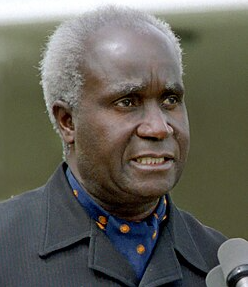
Kenneth Kaunda
Today we remember the people of Zambia whose lives were shaped—and too often scarred—by decades of colonial rule.
From the 1890s, when the British South Africa Company established control over the territory then known as Northern Rhodesia, until independence in 1964, Britain’s occupation lasted roughly 74 years. Company rule (c. 1890–1924) was followed by direct British colonial administration (1924–1964).
During this period, African communities endured land dispossession, racial discrimination, forced labor practices, harsh taxation, and the violent suppression of dissent. Historical records document deaths resulting from punitive expeditions, labor exploitation in mines and infrastructure projects, prison conditions, and localized uprisings, but scholars have not produced a definitive overall figure. The absence of precise numbers does not lessen the suffering experienced by countless families and communities.
Repression was typically manifested through detention, banning orders, and surveillance, while many lesser-known activists, workers, and villagers bore the majority of colonial enforcement efforts. Unfortunately, their names are frequently missing from written records.
In honoring the victims, we also remember the resilience of those who organized, protested, and negotiated for freedom. Leaders such as Kenneth Kaunda, Harry Nkumbula, and Simon Mwansa Kapwepwe faced imprisonment, restrictions, and political repression during the struggle for independence.
As Zambia gained independence on 24 October 1964, it did so through sustained civic resistance, political organization, labor activism, and negotiation. A memorial tribute must therefore hold two truths at once: the weight of injustice endured over seven decades, and the extraordinary determination of a people who transformed oppression into sovereignty.
May the memory of those who suffered—and those who stood for freedom—remain a guiding light in Zambia’s ongoing pursuit of dignity, equality, and justice.