African Soldiers' World War Memorial
Honoring the hundreds of thousands of Africans who served and died in World War I and II — soldiers, porters, and laborers whose sacrifices were largely unrecognized in mainstream war histories.
Africans who died in the First and Second World Wars were not only soldiers in European armies but also porters and laborers. The dead seldom came home: where their bodies could be found, they were laid to rest near the battlefields in Europe, the Middle East, and Southeast Asia (not exclusively).
Across the continent, countless civilians were caught in campaigns fought on African soil, with civilian casualties exceeding military deaths. In some regions of East Africa, population losses were catastrophic. Their contribution — and their losses — were significant, though they remained largely unrecognized in mainstream war histories.
Decades later, the sacrifices made by Africans in World Wars they knew nothing about remain deeply felt. Mourners in Africa, lacking individual graves, need a focal point for their grief.
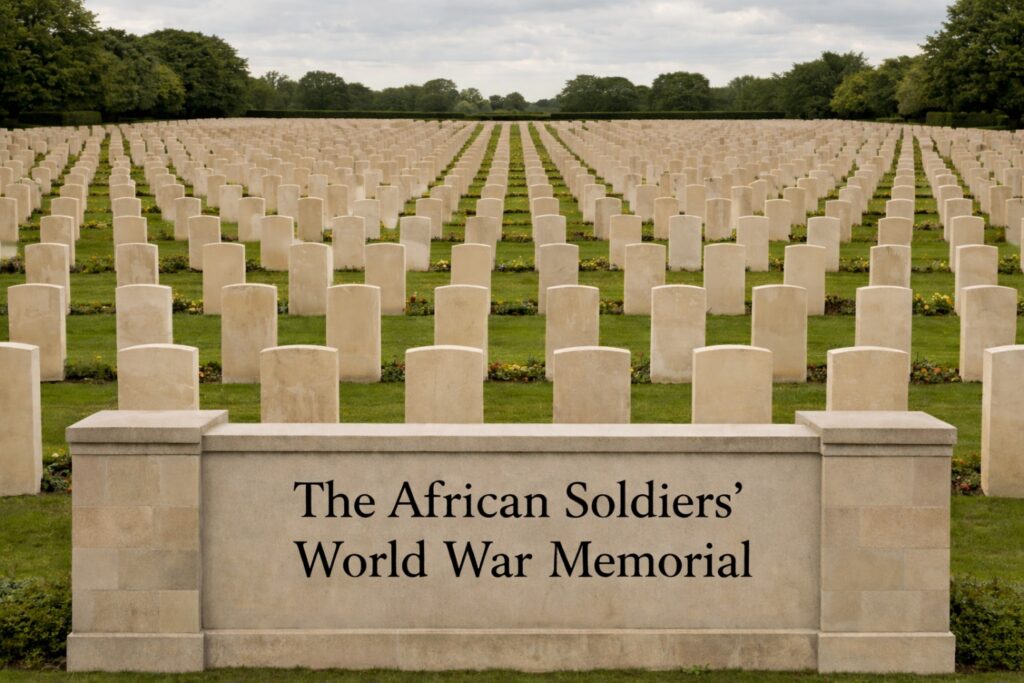
In response, an “African Soldiers’ World War Memorial” will be erected at the heart of ANCOM, where Africans of all racial, ethnic, and religious backgrounds can make pilgrimages, lay wreaths and flowers, and honor the memories of their fallen heroes.
--World War I
World War I (1914–1918)
Africans played a significant but often overlooked role in World War I (1914–1918). Hundreds of thousands served as soldiers and millions more as porters, laborers, and support staff. The war reached African soil directly, and African troops also fought in Europe and the Middle East. An estimated 150,000–200,000 Africans died, though exact numbers remain uncertain due to incomplete colonial records.
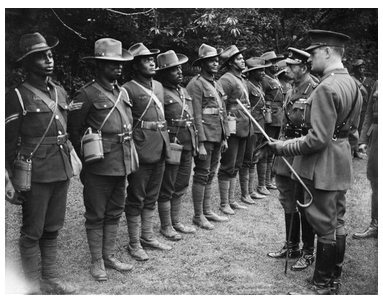
King George inspecting South African Native Labor Corps at Abbeville, 10 July 1317
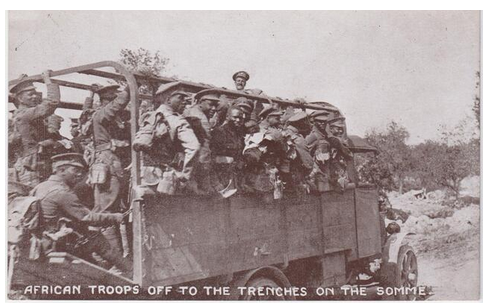
African soldiers off to the trenches on the Somme
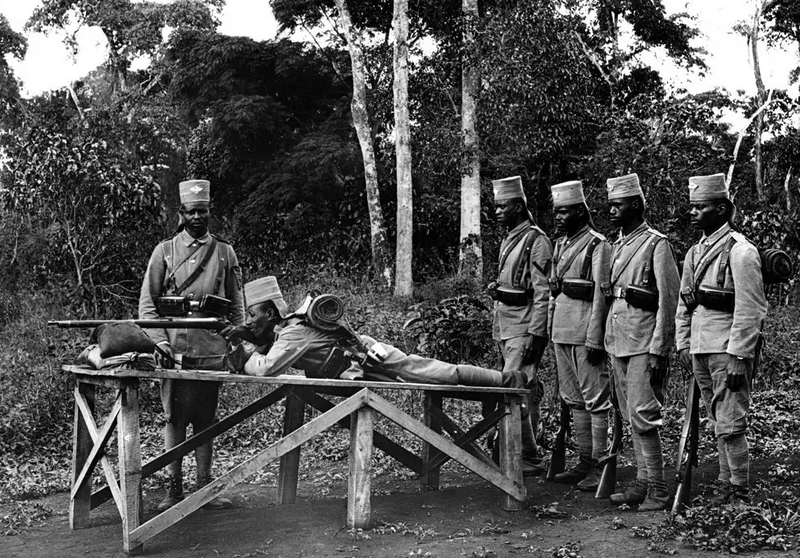
Askaris (local soldiers) during shooting practice in German East Africa – now Tanzania
Africans played a significant but often overlooked role in World War I (1914–1918). Hundreds of thousands served as soldiers and millions more as porters, laborers, and support staff. The war reached African soil directly, and African troops also fought in Europe and the Middle East. An estimated 150,000–200,000 Africans died, though exact numbers remain uncertain due to incomplete colonial records.
African Campaigns (1914–1918)
Much of the fighting occurred in Africa itself, as Allied forces sought to seize German colonies:
German East Africa (present-day Tanzania, Rwanda, Burundi), German Kamerun (Cameroon), German Southwest Africa (Namibia), and Togoland (Togo).
In German East Africa, under the command of Paul von Lettow-Vorbeck, a long guerrilla campaign had devastating consequences. African porters—known as “carriers”—were forced to transport supplies across harsh terrain. Disease, starvation, and exhaustion killed far more Africans than combat did.
African Soldiers in Europe and the Middle East
Colonial powers recruited African troops to fight abroad:
- France mobilized over 450,000 African soldiers, especially the Tirailleurs Sénégalais from West Africa. Many fought on the Western Front in brutal battles such as Verdun.
- Britain recruited soldiers from Nigeria, the Gold Coast (Ghana), Kenya, and South Africa. The South African Native Labor Corps served in France; over 600 Black South African troops died when the troopship SS Mendi sank in 1917.
- North African troops from Algeria, Tunisia, and Morocco fought for France in Europe and the Middle East.
Scale of Death and Suffering
While about 2 million Africans were directly mobilized, the wider impact was even greater: Many porters died from disease (especially influenza and dysentery). Forced requisition of food caused famine in parts of East and Central Africa. The Spanish flu, spread partly by wartime troop movements, killed millions across Africa after 1918. Civilian casualties in Africa likely exceeded military deaths. In some regions of East Africa, population losses were catastrophic.
Aftermath
In sum, Africans who died in the First World War were not only soldiers in European armies but also porters, laborers, and civilians caught in campaigns fought on African soil. Their contribution—and their losses—were immense, though long underrecognized in mainstream histories of the war. A hundred years on, the sacrifices of Africans in the First World War remain heartfelt.
--World War II
African Involvement in World War II (1939–1945)
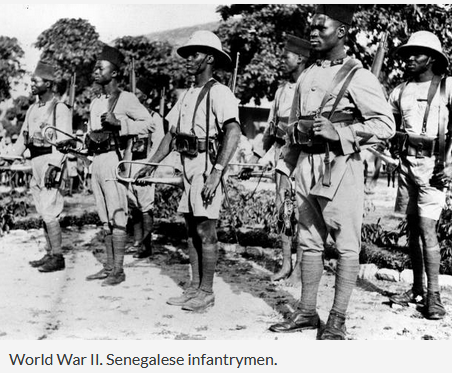
During World War II, millions of Africans were drawn into the conflict as soldiers, laborers, and support personnel under European colonial rule. African troops fought in Europe, North Africa, the Middle East, and Asia. Hundreds of thousands died—though exact figures remain debated due to incomplete colonial records.
North Africa
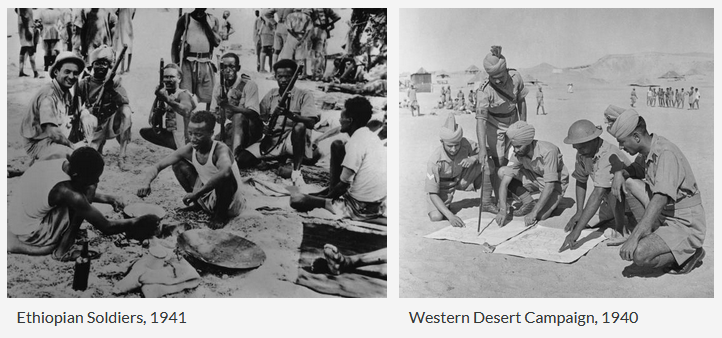
North Africa was both a battleground and a major recruitment base. In Egypt and Libya, heavy fighting between Axis and Allied forces (1940–1943) led to significant African military and civilian casualties. Moroccan, Algerian, and Tunisian troops fought in the French Army. Many died defending France in 1940 and later in campaigns in Italy and southern France. Ethiopian resistance fighters died resisting Italian occupation in the early years of the war.
West Africa
Britain recruited heavily from its West African colonies. The Royal West African Frontier Force (RWAFF) included soldiers from Nigeria, Ghana (then Gold Coast), Sierra Leone, and Gambia. West African troops fought in the Burma Campaign against Japan. Many died from combat, disease, and harsh jungle conditions.
East Africa
The King’s African Rifles (KAR) were recruited from British East Africa. Soldiers from Kenya, Uganda, Tanzania (then Tanganyika), and Malawi (then Nyasaland) served in East Africa and Burma. Thousands died in the East African Campaign (1940–1941) against Italian forces and later in Asia.
Southern Africa
South Africa contributed over 300,000 troops of different racial backgrounds. Black South Africans often served in non-combat roles but still faced dangerous conditions. Many died in North Africa and Italy. Troops from Zimbabwe (then Southern Rhodesia) also served in the British forces.
Casualties and Losses
Though precise numbers are difficult to determine, historians estimate that over 1 million Africans served in uniform, tens of thousands of African soldiers died in combat, and many more perished from disease, forced labor, famine, and wartime displacement. Civilian deaths in North and East Africa were substantial due to battles, bombing, and economic disruption.
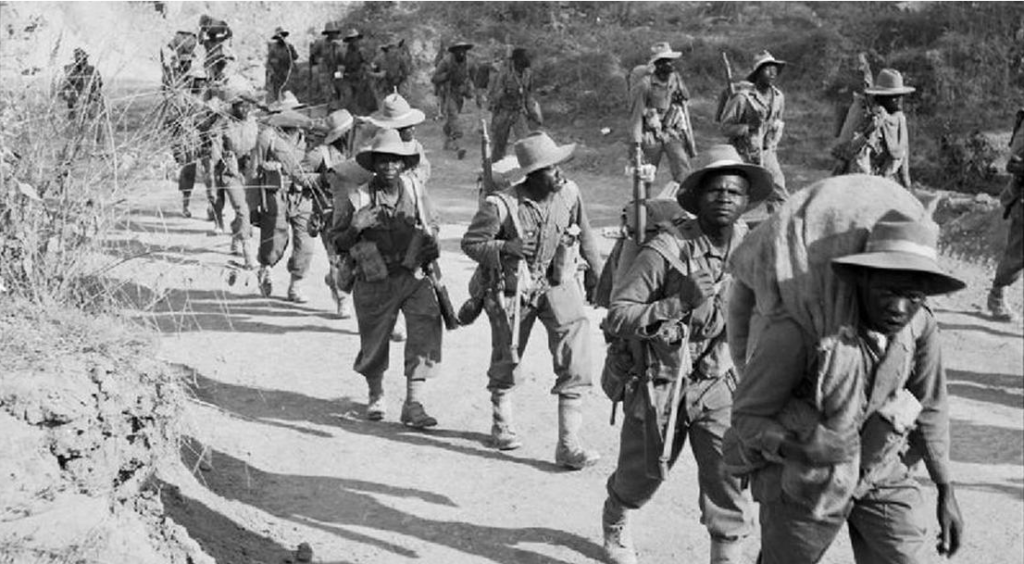
Troops from the East Africa Division fought in Burma, today Myanmar (Public domain image)
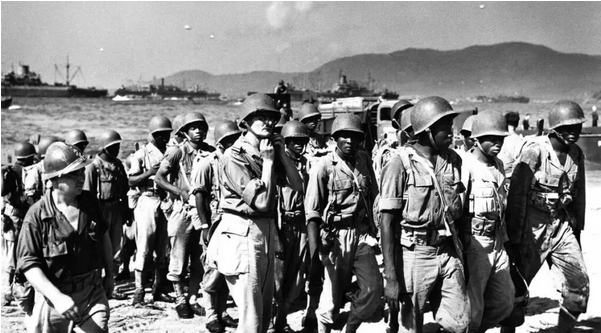
Tirailleurs Sénégalais, dressed in American uniforms, landing in Southern France, 1944. (Public domain image)
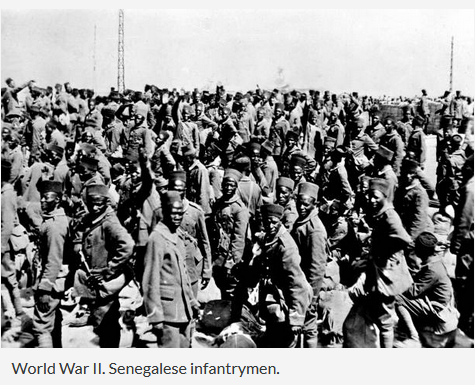
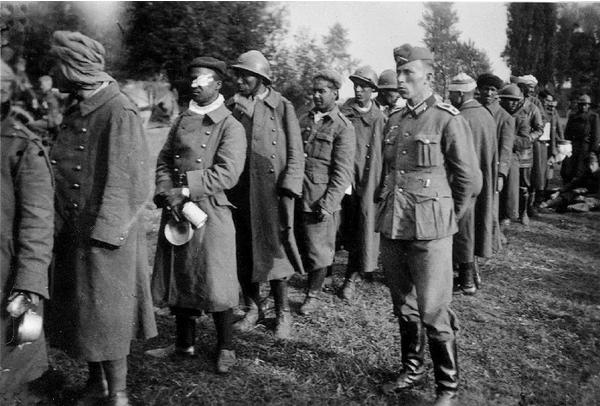
Captured North African soldiers of the French Army in 1940. Black and Arab soldiers faced harsh treatment and even medical experiments in German custody until the Germans decided it was better to win them over. (Public domain image)