
We're Restoring the Dignity of Africa's Martyred
Pro-Independence Leaders
Africa’s struggle for independence from European colonial rule in the 20th century produced many visionary leaders. Several of them paid with their lives for advocating freedom, unity, and self-determination. These martyred pro-independence leaders became powerful symbols of resistance. Their sacrifices inspired later generations and contributed to the broader wave of African decolonization, which continues to shape African political identity today.
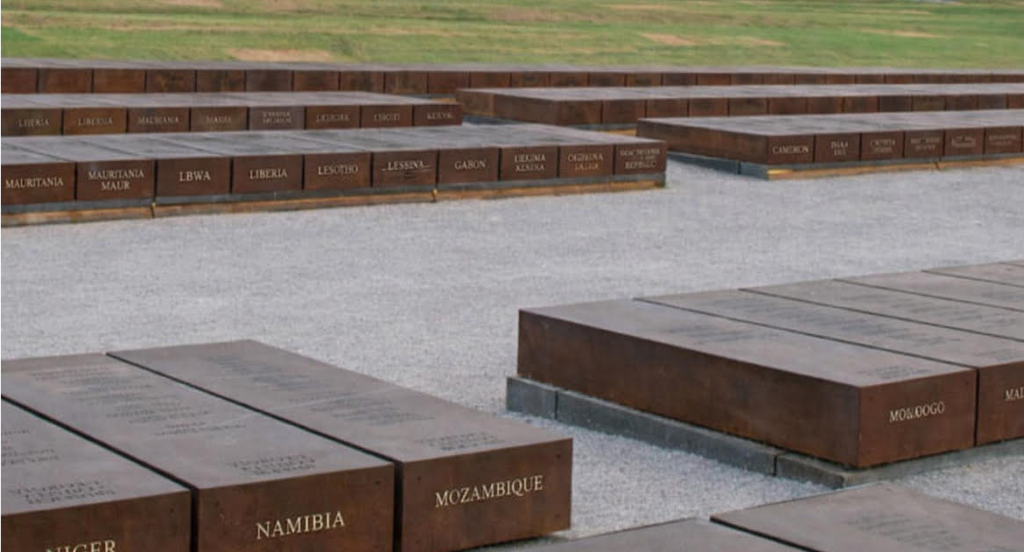
To restore the dignity of these pro-independence leaders who were killed under tragic circumstances and whose deaths were never properly acknowledged or given a fitting burial, soil is being collected from the various sites where they were either killed or buried. The soil, which still contains the sweat, tears, and blood of the victims, will be transported to ANCOM, where a large candle will burn in their honor.
1. Patrice Lumumba (1925–1961)
Congo
Patrice Lumumba was one of Africa’s most prominent anti-colonial figures. First Prime Minister after independence (1960), he led the independence movement against Belgium and became the Congo’s first democratically elected prime minister. Lumumba promoted national unity and sought to free the country from foreign economic control. During the political turmoil following independence — known as the Congo Crisis — he was overthrown, arrested, and assassinated in 1961. His death turned him into a global symbol of anti-imperialism.
2. Ruben Um Nyobè (1913–1958)
Cameroon
Ruben Um Nyobè was a nationalist leader who fought for independence from France. As head of the Union of the Peoples of Cameroon, he advocated peaceful political reform and the reunification of Cameroon. French colonial authorities banned his movement, forcing him into hiding. In 1958, he was hunted down and killed by colonial forces. His assassination intensified the Cameroonian independence struggle.
3. Amílcar Cabral (1924–1973)
Guinea-Bissau & Cape Verde
Amílcar Cabral founded the African Party for the Independence of Guinea and Cape Verde and led the liberation struggle against Portugal. A brilliant intellectual and strategist, Cabral organized one of the most successful guerrilla movements in Africa. In 1973, he was assassinated in Conakry by dissidents linked to the colonial conflict. Shortly afterward, Guinea-Bissau declared independence.
4. Eduardo Mondlane (1920–1969)
Mozambique
Eduardo Mondlane founded the FRELIMO (Mozambique Liberation Front) to oppose Portuguese colonial rule. He aimed to unify Mozambique’s diverse ethnic and political groups. Mondlane was killed in 1969 by a parcel bomb, which is widely believed to have been orchestrated by Portuguese colonial intelligence. His death strengthened the resolve of the independence movement, which eventually succeeded in 1975.
5. Thomas Sankara (1949–1987)
Burkina Faso
Although Burkina Faso had formally gained independence earlier, Thomas Sankara sought to achieve true political and economic independence from neo-colonial influence. Known for his anti-imperialist policies and social reforms, Sankara attempted to create a self-reliant state. He was assassinated in a 1987 coup. Many Africans regard him as a martyr for sovereignty and pan-African ideals.
6. Larbi Ben M'hidi (1923–1957)
Algeria
A founding member of the National Liberation Front (FLN), Larbi Ben M’hidi was a central figure in the Algerian War of Independence. Born in 1923 in Aïn M’lila, Algeria, he was captured by French paratroopers in February 1957 during the Battle of Algiers and executed by French forces on March 4, 1957, in Algiers. Initially, French authorities claimed he had committed suicide in his cell. However, later admissions by officials such as General Paul Aussaresses in 2001 and President Emmanuel Macron in 2024 confirmed that he was executed by hanging while in custody.
These martyred pro-independence leaders share several common traits: a dedication to national sovereignty and independence from colonial rule; a vision for social and political change beyond mere independence; and their assassination or death was linked to colonial or neo-colonial conflicts.
The legacies of Lumumba, Um Nyobè, Cabral, Mondlane, Sankara, Ben M’hidi (not exclusively) continue to influence debates about sovereignty, governance, and Pan-African unity across the continent. They were not only political figures but also symbols of resistance against colonial domination.