
Cameroon
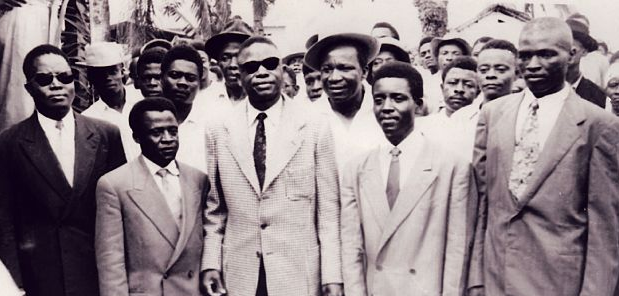
Founding members of the Union of the Peoples of Cameroon, led by Ruben Um Nyobè (center), Félix-Roland Moumié (2nd from the right), and Ernest Ouandié (1st from the right)
unresolved grief.
Following Germany’s defeat in World War I, Cameroon was divided in 1916, and France formally administered the larger eastern portion under a League of Nations mandate beginning in 1919. French rule continued under a United Nations trusteeship after World War II, lasting until Cameroon’s independence on January 1, 1960 — more than four decades of colonial administration (1916–1960).
The final years of French rule were especially violent. From 1955 onward, French authorities waged a brutal counterinsurgency campaign against nationalist movements, particularly in the Bamileke and Sanaga-Maritime regions. Estimates of the number of Cameroonians who lost their lives vary widely due to limited documentation and long-standing secrecy. Scholarly estimates generally range from tens of thousands to over 600,000 deaths during the repression and armed struggle between 1955 and the early 1960s.
Today, we remember not only the unnamed civilians — villagers, farmers, workers, and families — but also the leaders whose lives were taken in the struggle for independence.
Notable Pro-Independence Leaders Killed
- Ruben Um Nyobè – Secretary-General of the Union des Populations du Cameroun (UPC), he was assassinated by French forces in September 1958 in the maquis (rural resistance zones). His body was reportedly displayed publicly as a warning.
- Félix-Roland Moumié – Succeeded Um Nyobè as UPC leader. He was poisoned in Geneva in 1960 by a French secret service agent, dying shortly before Cameroon formally achieved independence.
- Ernest Ouandié – A key UPC leader who continued resistance after independence. He was captured and executed in 1971 following a trial widely criticized as politically motivated, in the aftermath of the colonial-era conflict.
These figures symbolize a broader generation of Cameroonians who risked — and often lost — their lives demanding dignity, sovereignty, and self-determination.
A Memorial Reflection
We honor the memory of the hundreds of thousands who perished in forests, villages, prisons, and exile.
We remember the silenced voices, the broken families, and the resilience that endured beyond repression.
Their struggle shaped modern Cameroon and remains part of a larger reckoning with colonial history.
May their sacrifice never be forgotten, and may remembrance guide future generations toward truth, justice, and reconciliation.