
Egypt
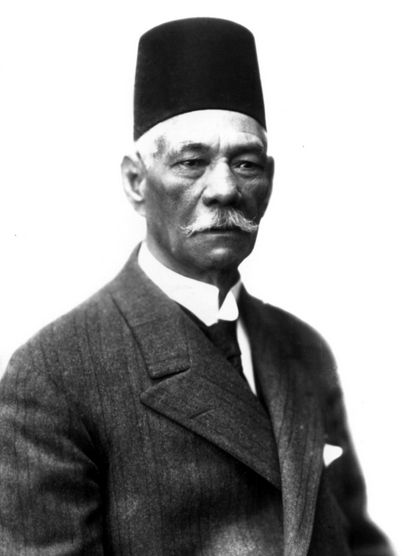
Saad Zaghloul
We remember with solemn respect the countless Egyptians whose lives were disrupted, lost, or forever altered by the long shadow of colonial rule. From the bombardment of Alexandria in 1882 to the struggles that echoed through cities, villages, and fields, the pursuit of freedom and dignity exacted a profound human cost. British military force and political repression deepened wounds within communities, silenced voices calling for self-determination, and contributed to deaths in revolts, protests, and confrontations over seven decades of foreign domination. The courage of ordinary Egyptians — students, laborers, intellectuals, and soldiers — stands as a testament to the unyielding human desire for sovereignty and justice.
British Occupation of Egypt
British forces invaded Egypt in 1882 following the suppression of the ʻUrabi nationalist uprising, marking the start of effective occupation. Although nominal independence was declared in 1922, British influence and control over key military and political matters continued strongly.
British troops remained in the Suez Canal Zone until 1956, when they finally withdrew, ending roughly 74 years of occupation.
Exact numbers are debated among historians, but available estimates indicate that:
Tens of thousands of Egyptians were killed during the initial Anglo-Egyptian War and subsequent uprisings around 1882.
Hundreds more died in later confrontations, notably in the violent suppression of anti-British resistance and protests, including during the 1919 Revolution and the clashes around the Canal Zone in the early 1950s.
Notable Egyptian Pro-Independence Leaders Affected by British Colonial Authority
While many Egyptian patriots resisted colonial rule, only a few leaders were directly killed by British authorities; much of the repression took the form of exile, imprisonment, or suppression rather than formal executions ordered by British officials:
Colonel Ahmed ʻUrabi (Arabi Pasha) — Leader of the 1879–1882 nationalist uprising. After defeat by British forces, he was exiled to Ceylon rather than killed, but his cause inspired long-lasting resistance.
Egyptian Nationalists Exiled in 1919 — Leaders such as Saad Zaghloul, Abd al-Fahmi, Ali Sharawi, and others were arrested and deported by British authorities to Malta for demanding independence, which triggered the 1919 Revolution.
Saad Zaghloul (1859–1927), the founder of independent Egypt, returned to Egypt to participate in the 1919 revolution. Zaghloul then persuaded the Sultan of Egypt (later King) Fuad I to convince the British to grant Egypt independence while maintaining a friendly British-Egyptian relationship. In 1922, Egypt was proclaimed an independent kingdom, the Kingdom of Egypt, with Saad Zaghloul as its prime minister.
A politician who served in many ministries of the Egyptian government, Zaghloul was a leading symbol of the independence movement after his imprisonment by the British in Malta. He died decades later of natural causes.
Other Nationalists and Protesters — Many Egyptian patriots and protesters were killed during violent suppressions of anti-British demonstrations (e.g., the Cairo confrontations in 1920 and the Ismailiya clashes of 1952), though these deaths were largely civilians or lesser-known activists rather than well-known leaders. British military presence in Egypt ended with the nationalization of the Suez Canal in 1956.
The prevailing historical view holds that Muhammad Ali (1769–1849) is the Father of Modern Egypt, the first ruler since the Ottoman conquest in 1517 to permanently divest the Porte of its power in Egypt. Although he did not achieve formal independence for Egypt during his lifetime, he laid the foundation for a modern Egyptian state.