
Rwanda

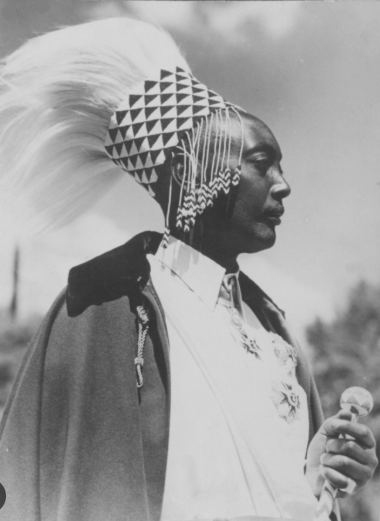
King Mutara III Rudahigwa
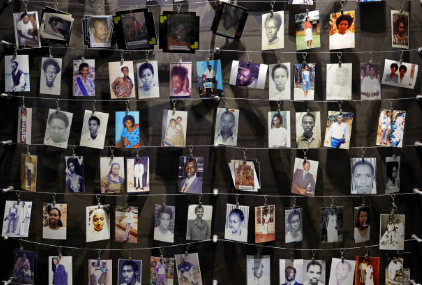
Victims of the Rwandan Genocide
Today, we remember the people of Rwanda who endured decades of hardship under foreign domination, including the years of German colonial rule from approximately 1897 to 1916, when Rwanda was incorporated into German East Africa, and Belgium after 1916.
Germany governed Rwanda indirectly through the existing monarchy, reshaping political authority to serve colonial interests. Though large-scale settler colonization did not occur as it did elsewhere, the period was marked by coercion, forced labor demands, military intimidation, famine exacerbated by colonial extraction, and violent suppression of resistance. Precise figures are difficult to establish due to limited colonial records, but historians agree that thousands of Rwandans died as a result of warfare, punitive expeditions, forced labor systems, displacement, and related hardships during this period.
It is important to note that a formal, organized pro-independence movement in Rwanda largely emerged later, during Belgian rule. Belgian forces occupied Rwanda in 1916 during the First World War, taking control from Germany. In 1922, Belgium formally received a League of Nations mandate over Rwanda (then administered with Burundi as Ruanda-Urundi), later continuing its authority under a United Nations trusteeship after World War II. Belgian rule lasted until Rwanda’s independence on July 1, 1962—nearly 46 years of direct colonial administration.
During this period, colonial policies reshaped Rwandan society in profound and painful ways. Racialized identity cards, rigid ethnic classifications, forced labor, heavy taxation, and coercive agricultural schemes deepened divisions and fueled cycles of violence that would scar the nation for generations.
Historians agree that many thousands of Rwandans perished due to forced labor, famine exacerbated by colonial economic demands, repression, and episodes of political violence during the late colonial period.
As independence movements grew in the 1950s, political tensions intensified. Some Rwandan nationalists and reformers were imprisoned, exiled, or suppressed by colonial authorities. One prominent figure of the era was King Mutara III Rudahigwa, who advocated greater autonomy. Many Rwandans at the time suspected colonial involvement in his sudden death in 1959.
In honoring the victims of colonial rule, we remember not only those whose deaths were directly linked to German and Belgian colonial rule, but also victims of the Rwanda genocide, which was rooted in a long-standing colonial divide.
The Rwandan genocide, also known as the genocide against the Tutsi or the Tutsi genocide, occurred from 7 April to 19 July 1994. Over a span of around 100 days, members of the Tutsi ethnic group, as well as some moderate Hutu and Twa, were systematically killed by Hutu militias. Between 500,000 and 1 million people were killed.
In honoring those who suffered violence, coercion, and loss under colonial rule, we recognize their humanity, resilience, and the lasting dignity of the Rwandan people. Let remembrance serve not only as a reflection on injustice but also as a reaffirmation of sovereignty, truth, and accountability in history.