
Eswatini
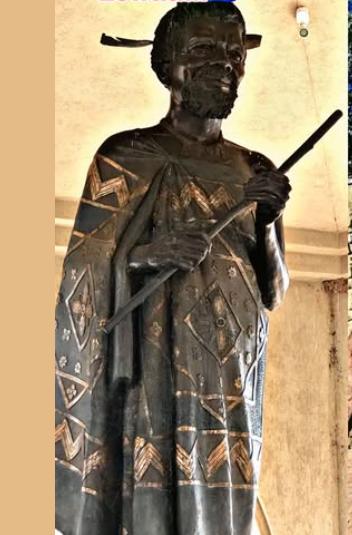
Statue of King Sobhuza II
We remember with solemn respect the resilience of the people of the Kingdom of Eswatini, who endured decades of foreign political control and systemic marginalization under British colonial rule. For more than six decades, from the early 20th century until full independence on September 6, 1968, Eswatini was governed under British indirect rule as one of the High Commission Territories of the British Empire.
Under this arrangement, traditional governance structures were constrained, land and economic rights were often negotiated in ways that disadvantaged local communities, and indigenous authority was systematically reshaped. While Eswatini did not experience large-scale armed insurrections like those in some parts of Africa, the processes of land partition, administrative imposition, and political negotiation came at a deep cultural and social cost.
We honor those whose lives were irrevocably changed—through loss of land, erosion of traditional governance, and the struggles of everyday life under colonial systems. Their quiet fortitude and enduring traditions sustained the spirit of Eswatini through years of change and challenge.
May we also acknowledge the ongoing work of advocates in Eswatini today who champion justice, human rights, and democratic reform, remembering that the shadow of colonial histories can still shape present struggles.
British Political Authority in Eswatini (1903–1968)
After the Second Boer War (1899–1902), Swaziland (now Eswatini) came under British influence and was classified as one of the British “High Commission Territories” alongside Basutoland (Lesotho) and Bechuanaland (Botswana).
From 1903, British administrative authority was exercised (initially indirectly and without full formal protectorate status) and formalized by 1906, lasting until 1968, when Eswatini became fully independent as a sovereign nation.
During this period, political and legal reforms were introduced gradually, culminating in limited self-government and eventual independence.
Unlike many other areas with documented armed uprisings and large casualties during anti-colonial struggles, there are no records of widespread public uprisings against British authorities in Eswatini that led to significant casualties, unlike in other parts of southern Africa.
Legacy and Remembrance
Though Eswatini did not experience the same scale of violent repression or loss of life directly tied to anti-colonial insurrection as in some other African nations, the impact of colonial rule—through land dispossession, constrained self-rule, and cultural negotiation—left a lasting mark on the nation. The people’s endurance through these years laid the foundation for the independent Kingdom of Eswatini, a land of deep tradition, spirit, and cultural continuity.
We honor all those whose lives were shaped by this era and recognize that their experiences—documented and undocumented—form an essential part of Eswatini’s history and collective memory.