
Nigeria


Muhammadu Attahiru I
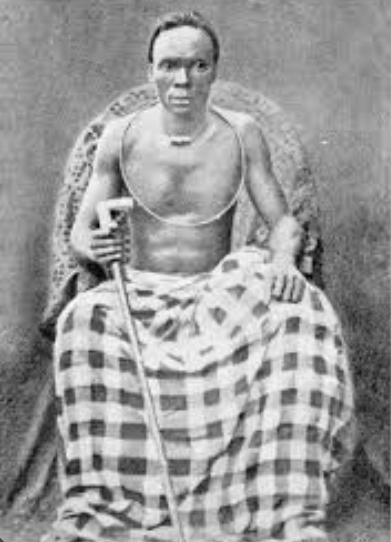
Nana Olomu
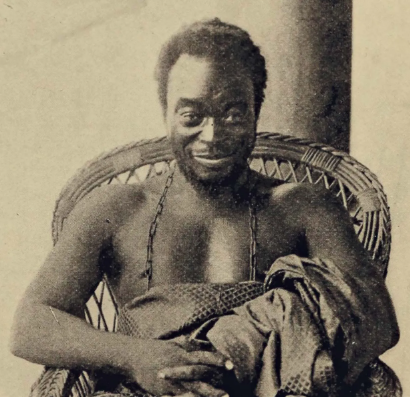
Ovonramwen Nogbaisi
Today, we honor the countless lives affected, displaced, and lost during Nigeria’s British colonial era — a time that altered societies, redrew borders, and left enduring scars across generations.
Britain’s formal control began with the annexation of Lagos in 1861 and expanded through military conquest and political consolidation, culminating in the 1914 amalgamation of the Northern and Southern Protectorates under the British Empire. Colonial rule endured until Nigeria’s independence on October 1, 1960 — nearly a century of direct and indirect domination.
There is no single, universally accepted figure for the number of Nigerians who lost their lives under British conquest and administration. Historians agree, however, that thousands were killed during military campaigns such as the Anglo-Aro War (1901–1902), the conquest of the Sokoto Caliphate (1903), the Benin Expedition (1897), and in the suppression of resistance movements, including the 1929 Women’s War. Beyond battlefield deaths, many more perished from displacement, forced labor, punitive expeditions, famine, and the social upheavals that accompanied colonial restructuring.
Resistance Leaders Who Died in Conflicts with British Forces
While many prominent nationalist politicians of the 20th century (such as Nnamdi Azikiwe or Obafemi Awolowo) were imprisoned rather than executed, several earlier resistance leaders were killed during British military campaigns:
Muhammadu Attahiru I – The Sultan of Sokoto who led armed resistance against British forces in 1903 and was killed in battle.
Ovonramwen Nogbaisi – The Oba of Benin, deposed after the 1897 British punitive expedition; though not executed, he died in exile in 1914 following the destruction of his kingdom.
Nana Olomu – An Itsekiri merchant chief who resisted British trade control; he was captured and deported, dying in exile in 1916.
In honoring the victims of colonial rule, we remember not only those who fell in battle, but also communities fractured, cultures suppressed, and generations compelled to struggle for dignity and self-determination.
The Nigerian-Biafran War (1967–1970), which resulted in a massive humanitarian catastrophe with an estimated 1 to 2 million civilian deaths, primarily from starvation, disease, and military blockades, stands as an example of the direct effects of colonization. The victims were predominantly Igbo people, along with ethnic minorities in the Eastern Region, such as the Efik, Ibibio, Ijaw, and Ogoja.
May their memory be a call to justice, historical truth, and the continued pursuit of sovereignty and unity.