
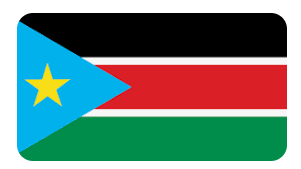
South Sudan

John Garang
Today, we remember the people of South Sudan who suffered under colonial domination during the period of the Anglo-Egyptian Sudan (1899–1956), jointly administered by Britain and Egypt under the authority of the United Kingdom. For 57 years, the peoples of the southern regions endured political exclusion, economic neglect, forced labor practices, punitive expeditions, and the disruption of their social and cultural systems.
The exact number of South Sudanese who died as a direct result of British colonial policies is unknown. Colonial records from the southern provinces were limited, and many deaths from armed suppression of local resistance, intercommunal violence exacerbated by divide-and-rule policies, famine, disease, and forced labor were never systematically documented. What is clear is that entire communities were destabilized, traditional authorities were undermined or co-opted, and generations grew up under restrictive systems that denied meaningful self-determination.
Armed resistance to colonial rule occurred in various southern regions in the early decades of the 20th century. Some local chiefs and community leaders were killed during British military campaigns aimed at “pacification,” but historical records do not provide a comprehensive, widely recognized list of prominent, nationally organized South Sudanese pro-independence leaders who were executed specifically by European colonial authorities. Much of South Sudan’s later independence leadership emerged in the mid-20th century, closer to Sudan’s independence in 1956, and decades later during the civil wars.
Notable pro-independence leaders of South Sudan who died during the liberation struggle include:
Dr. John Garang de Mabior: He was the main figure involved in spawning and leading the South Sudanese Independence Movement. Garang led the movement from 1983 until his death in a 2005 helicopter crash shortly after signing the Comprehensive Peace Agreement (CPA). Even though he did not live to see his country attain independence, he is often regarded as the “Father of the Nation.”
Kerubino Kuanyin Bol: A founding member of the SPLA who led Battalion 105 in the initial 1983 mutiny.
William Nyuon Bany: A key founding member and high-ranking commander of the SPLA.
Arok Thon Arok: A senior SPLA commander and member of the political-military high command.
William Deng Nhial: An early leader in the Anya Nya movement.
These figures are considered martyrs of the 21-year struggle that led to South Sudan’s independence on July 9, 2011.
As we reflect on this history, we honor the unnamed villagers, elders, women, and men whose lives were cut short or forever altered. Their resilience sustained cultures, languages, and identities that endured despite repression. Their memory lives on in South Sudan’s independence in 2011 — a testament to generations who endured hardship yet never relinquished the hope of governing themselves.