
Sudan

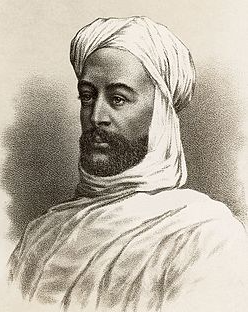
Muhammad Ahmad
In remembrance of the lives forever changed and lost under colonial rule, we honor the people of Sudan, whose struggle for dignity and self-determination endured decades of foreign domination.
From 1899 to 1956, Sudan was governed as the Anglo-Egyptian Sudan, a joint administration led in practice by the United Kingdom and Egypt. This period of colonial occupation lasted 57 years, following earlier violent campaigns that crushed the Mahdist state in 1898–1899.
The reconquest of Sudan at the end of the 19th century was especially devastating. At the Battle of Omdurman in 1898 alone, historians estimate that 10,000–12,000 Sudanese fighters were killed in a single day, with thousands more wounded. Across the wider campaigns of conquest and early consolidation, casualties reached the tens of thousands.
While no comprehensive or universally agreed-upon figure exists for the total number of Sudanese who died as a direct result of colonial warfare, repression, famine, and forced labor during the entire occupation, the human toll was profound and lasting—measured not only in lives lost but also in communities displaced and futures constrained.
Among those who resisted foreign rule, several figures stand in solemn memory:
Abd al-Fadil al-Maz – A leader in the 1924 nationalist uprising (the White Flag League movement), he was executed by British colonial authorities for his role in armed resistance.
Muhammad Ahmad bin Abdullah bin Fahal (12 August 1843 – 21 June 1885) was a Sudanese religious and political leader. In 1881, he declared himself the Mahdi and led a rebellion against Egyptian control in Sudan. His efforts culminated in a significant victory during the Siege of Khartoum. He established a large Islamic state spanning from the Red Sea to Central Africa and founded a movement that continued to influence Sudan a century later.
Abdallahi ibn Muhammad – Successor to the Mahdi and head of the Mahdist state, he was killed in 1899 during the final stages of the Anglo-Egyptian reconquest.
Many other nationalist figures, including Ali Abd al-Latif and Osman Digna, were captured and detained for years. Though not all were killed, their persecution reflects the high cost of demanding freedom.
Today, this tribute celebrates not only the well-known leaders but also the countless unnamed individuals—farmers, soldiers, mothers, and children—who endured and sacrificed for Sudan’s journey to independence in 1956.
May their memory stand as a testament to resilience, inspiring ongoing efforts for sovereignty, justice, and peace.